Average Reviews:

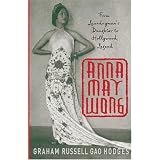
(More customer reviews)Are you looking to buy Anna May Wong: From Laundryman's Daughter to Hollywood Legend? Here is the right place to find the great deals. we can offer discounts of up to 90% on Anna May Wong: From Laundryman's Daughter to Hollywood Legend. Check out the link below:
>> Click Here to See Compare Prices and Get the Best Offers
Anna May Wong: From Laundryman's Daughter to Hollywood Legend ReviewIn a mysterious convergence of coincidence and good fortune reminiscent of that week in 1975 when then-immerging rocker, Bruce Springsteen, landed on the covers of both TIME and NEWSWEEK, we've witnessed the publication of three monographs on Anna May Wong in a one-year span. Let it be known that, heretofore, there have been no Anna May Wong books, no Anna May Wong "industry" (as there is for, say, Marilyn Monroe or dozens of other dead celebs), and that the unfortunate actress had been lucky to get a capsule bio or passing reference in most mainstream film histories.Thus, after years of neglect, a full-length biography of Ana May Wong (1905-1961), the first Chinese American star, whose career spanned the silent era, the talkies, stage, radio and television, is cause for celebration.
I should alter that to cause for "qualified celebration," for Graham Russell Gao Hodges' always well-meaning but sometimes flawed ANNA MAY WONG: FROM LAUNDRYMAN'S DAUGHTER TO HOLLYWOOD LEGEND, is not the definitive bio her fans have longed for.
It is good on a whole, even excellent in some respects, but there are technical inconsistencies at hand and dubious interpretations proffered that prevent it from being a totally reliable, much less authoritative statement on its subject.
Furthermore, at the risk of appearing a crank, I'll say that I've encountered few books put out by a major publisher (Paragon Macmillan is an imprint of St Martin's Press) so fraught with repetitions, typos, imprecise language, faulty syntax and poorly constructed writing. At times, the reader feels compelled to cry out, "Is there an editor in the (publishing) house?"
In a chapter devoted to Wong's early career, for instance, Hodges dutifully describes Wong's involvement in several silent films from Cinema's Black & White past, when, suddenly, he starts to describe the colors of her costumes in yet another. What, you may well ask, true-to-life colors in a silent movie? It is not until the sixth paragraph devoted to the film in question that the author reveals that THE TOLL OF THE SEA (1922) just happened to be the first Technicolor feature.
(There are other such lapses, but since they've been noted elsewhere, I shan't repeat them here.)
Though penned by a university professor (Hodges teaches History at Colgate University), the book is accessible and targeted--presumably--for a just-above-middlebrow readership of movie buffs, enlightened culture fans, and curious bibliophiles in search of an offbeat bio. Its availability is obviously welcomed by scholars of Asian American and Film Studies, to say nothing of Wong's loyal "keepers of the flame." While the book cites sources and features a bibliography, filmography and list of Wong's television appearances, it isn't "academic" in tone, nor is it the puff piece or hackwork that some have made it out to be. It isn't as great as it could be, but isn't terrible either.
While I've seemingly dwelled upon the book's weaknesses, there are many things to admire here, and we should be grateful to Hodges for bringing to light many hitherto unknown and obscure facts about Anna May Wong, such as her interview with the Frankfort School philosopher and cultural critic Walter Benjamin (alas, not yet available in English translation), or her long-standing friendship and correspondence with 20th Century (Harlem) Renaissance Man, Carl Van Vechten, or that she was the likely inspiration for songwriter Eric Maschwitz's romantic standard, "These Foolish Things."
The author has done a commendable job of gathering the facts. Hodges has traveled the world in search of printed primary and secondary sources, and his book is an admirable compendium of excerpts from yellowing press clippings and movies magazines from long ago and far away, and a fair sampling of some up-to-date theories and perspectives, too. He did not interview Wong's surviving brother, Richard (it's been said that he doesn't grant interviews with anyone, anyway), but he did travel to China and discovered new information and materials on the Chinese branch of her father's family. Hodges excels at gathering material and archival research, and his book will undoubtedly inspire other writers and scholars in their own research into Wong's life, films and legacy.
I think his treatment of her personal life is as in-depth as can be expected for a subject born a hundred years ago, and who died before a "revival" kicked in. Hodges paints his subject as a woman of wit, talent, intelligence (she spoke several languages), and courage. He writes of her triumphs and disappointments, from her earliest years growing up a movie-obsessed kid on the outskirts of L.A.'s Chinatown, to her achievements on stage and screen, to her twilight years in Tinseltown.
The author reflects a global view of the star who was often "too Chinese" for European American Hollywood, and "too American" for Nationalist China. Hodges, himself married to a Chinese, demonstrates particular insight into Wong's duality, and the peculiar cultural/racial tightrope she traversed. He also writes with authority on the authenticity and appropriateness of the actress' various ethnic hairdos, costumes, gestures and dances in many film roles. Still, I think he goes overboard in always attributing the introduction of these elements to Wong's overt contribution or sly "coding" of ethnographically correct elements and their "political and national associations" into mainstream European and European American films.
Hodges, who has in the past written on African American history, is particularly sensitive to matters of race and civil rights, and is quite effective in conveying the particular hardships that American citizens of Chinese descent had to endure in the wake of the Chinese Exclusion Act of 1882 until its repeal only during Wong's lifetime. He writes compellingly of Wong's ambivalence about her Chinese heritage and its traditions--she was in most ways a thoroughly modern American woman--and how an extended trip to the land of her ancestry was something of a life-changing experience for the star.
The author touches on just about every aspect of Wong's life and work, and various mass-media interpretations of the same. Hodges also explores Wong's legacy, and shows that he is hip to the long-standing "camp" appreciation of Wong, and of artists like Andy Warhol, Martin Wong and Ray Johnson who executed works devoted to the exotic star. He also shows that Wong, who might be accused of perpetuating unflattering perspectives of Asians in her film roles, poses a problematic figure to scholars of Asian American history.
Anna May Wong is a fascinating subject, and Hodges is in so many ways an insightful and sympathetic biographer. Yet, his isn't quite the biography its subject deserves. (See Barry Paris' LOUISE BROOKS, (Knopf, New York, 1989) for an example of a thoroughly riveting, incisive and authoritative account of a film star and one of Wong's contemporaries.) If this book is ever released in paperback, let's hope that it is a "revised" edition; there is plenty of good material here for a judicious editor to craft into a much better book.
Anna May Wong: From Laundryman's Daughter to Hollywood Legend Overview
Want to learn more information about Anna May Wong: From Laundryman's Daughter to Hollywood Legend?
>> Click Here to See All Customer Reviews & Ratings Now

0 comments:
Post a Comment