Average Reviews:

(More customer reviews)Are you looking to buy W. C. Fields: A Biography? Here is the right place to find the great deals. we can offer discounts of up to 90% on W. C. Fields: A Biography. Check out the link below:
>> Click Here to See Compare Prices and Get the Best Offers
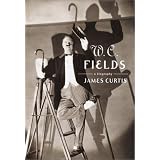
W. C. Fields: A Biography ReviewThe most famous quote by W. C. Fields is, "Any man who hates dogs and children can't be all bad." The trouble is, it wasn't said by him. It was said about him by, of all things, an anthropologist who was studying the motion picture industry. And it was not close to true about Fields. Among the many pleasing revelations in _W. C. Fields: A Biography_ (Knopf) by James Curtis is that Fields was not inimical to children. Oh, he didn't like dogs very much, but he owned a few and didn't put up objections against the species. And he didn't like Baby Leroy, the child co-star most associated with him. The [child] was terrified by Fields's appearance and could burst into tears at any scene, and it does seem to be true that Fields spiked the nipper's orange juice with gin to make him more a trouper. But throughout Fields's life he was partial to children. Will Rogers's son remembered Fields as a guest for dinner, both because he took time to talk to the boy, and because he juggled the brand new imported glass plates for his entertainment; his mother was not as well pleased. Watching kids at an Indian reservation play ball, he saw them using a wad of tape for a ball and a stick for a bat; he had an Indian pal buy full equipment, but warned, "If you tell a soul I did this, ...I'll never supply you with any more booze." He ingratiated himself to young Freddie Bartholomew, who played David Copperfield as a boy, by asking, "Tell me, son, are you a midget or am I overgrown?"The stories about Fields and children are scattered throughout this large and detailed volume. It might be that they were a reaction against his own childhood, but that childhood was not as bad as he liked to make it seem. He early discovered he had a genius for juggling, and began imitating the comic tramp juggler acts he would see on the vaudeville circuit. He began talking more during the performances, conquering a stammer and forming a habit of ad libs that was to be a blessing and a curse throughout his career. He did less juggling as he worked in more legitimate theater, like the Ziegfeld Follies in which he performed from 1915 - 1925. He concentrated on sketches that emphasized physical comedy and his perpetual warfare against inanimate objects, like the family car, twisted pool cues and floppy golf clubs. Such performances were incorporated into his films, the best of which often were only excuses for a series of sketches. He had done some silent films, but worked in Hollywood full time starting when he was all of fifty-one years old. He had strong friendships, but a terrible marriage. His death at age 66 in 1946 was hastened by the alcohol he loved; he had drunk very moderately while his juggling act depended on superb coordination. His intake became legendary, and a part of his persona, and a recurrent joke that he himself enjoyed. He did not, though, play drunks on screen, however much the characters imbibed, and he was ashamed of those who let alcohol degrade their film work.
This is a thorough and engrossing biography of an American character who still matters. Not only are there detailed descriptions of life on the theatrical road and the difficulties of motion picture production in the 1940s, but there are insights into many of the characters with whom Fields worked. Memorable among these is Edgar Bergen, a shy and reticent man, who used his wooden alter ego, Charlie McCarthy to insult others and fight battles. The famous Fields - McCarthy radio duels are here shown to be surprisingly personal. There have been few Hollywood performers who have deliberately perverting such American ideals as industriousness and generosity; screen comics now may be tasteless, but they are not subversive. Fields risked pushing his audience away with all manner of not just exaggerated shortcomings but also vices, and allowed his comic creations to be held inseparable from his own personality. There is no one else who could have put the holiday advertisement in _Variety_, as he did in 1928: "Happy New Year to almost everybody."W. C. Fields: A Biography Overview
Want to learn more information about W. C. Fields: A Biography?
>> Click Here to See All Customer Reviews & Ratings Now

0 comments:
Post a Comment